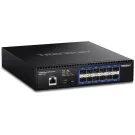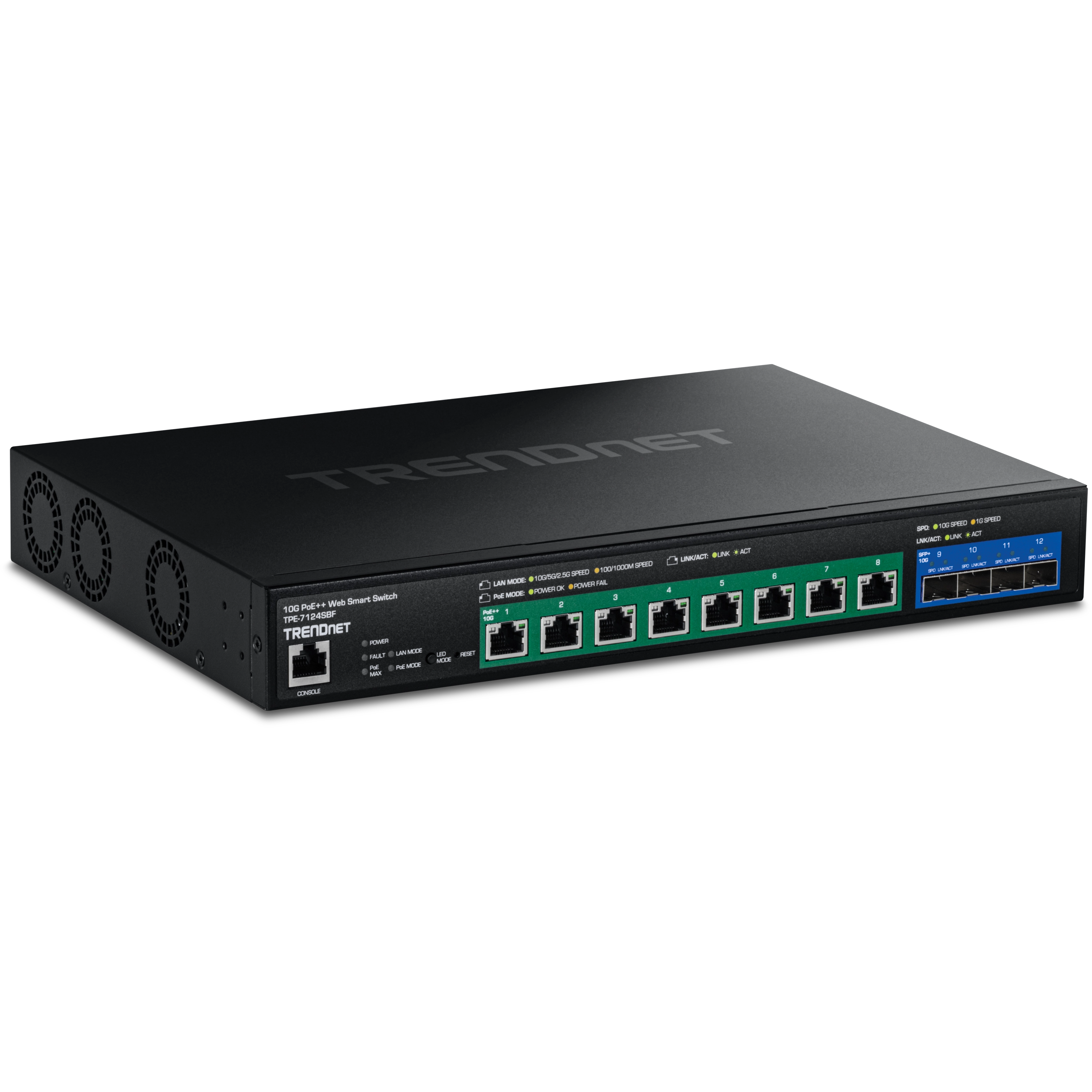
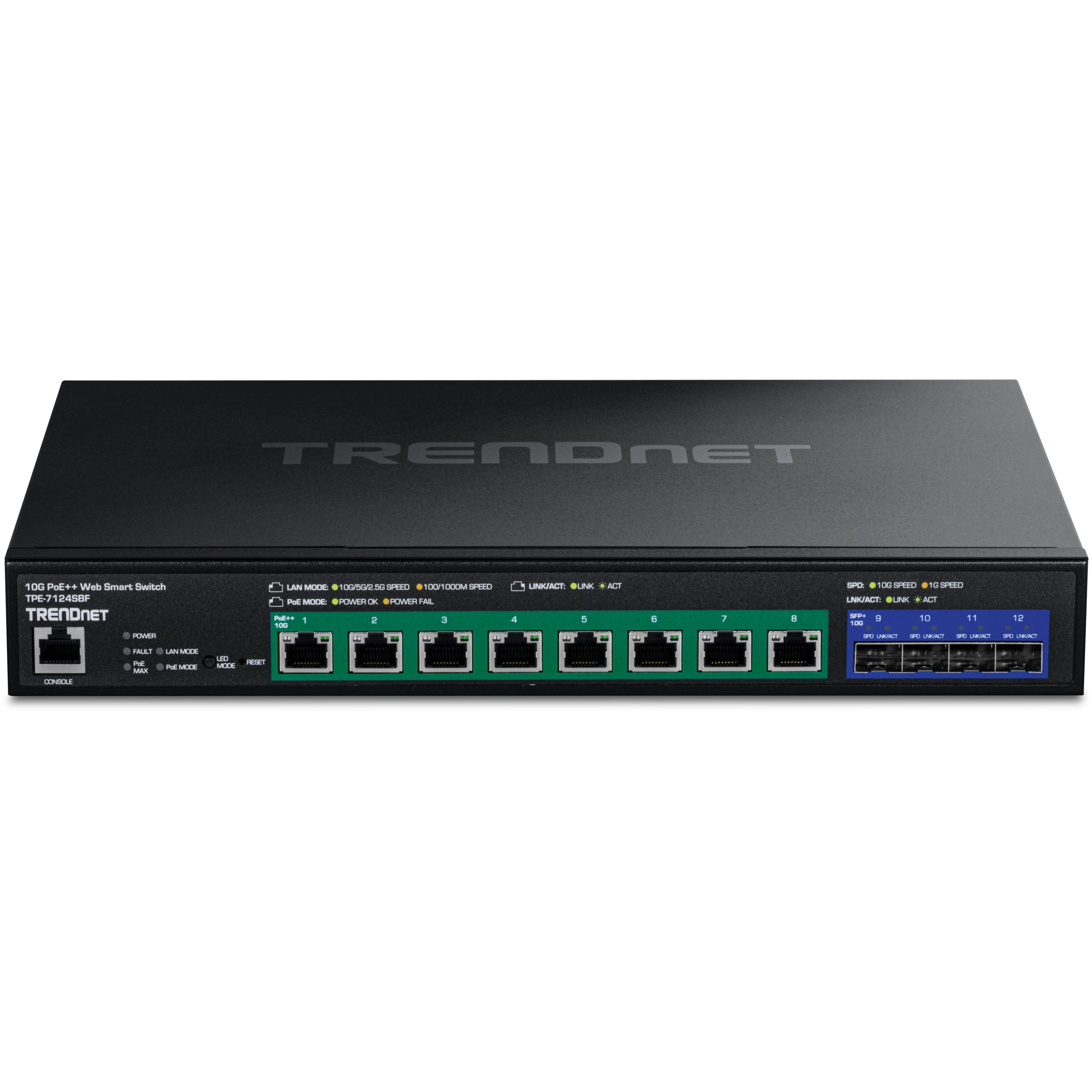
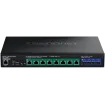
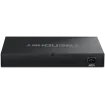
Trendnet - TPE-7124SBF - 12-Port 10G PoE++ Web Smart Switch (720W)
Part number:
Price:
- • 8 x 10G PoE++ ports
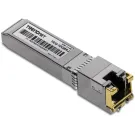
- • 4 x 10G SFP+ ports
- • 720W PoE power budget
- • Fast PoE minimizes wait time for powering up PoE devices
- • Perpetual PoE eliminates PoE down time during switch reboot
- • PoE alive check automatically attempts to recover an unresponsive, connected PoE device
- • Supports 100M/1G/2.5G/10GBASE-T link speeds
- • Easy-to-use web-based management interface
- • Supports IPv6, LACP, VLAN, QoS, IGMP/MLD Snooping
- • IPv4/IPv6 Static Routing support
- • Bandwidth control per port
- • Voice VLAN support
- • 1U 19” rack mountable metal housing
- • NDAA / TAA compliant (U.S. and Canada only)
- • Lifetime Warranty
| Standards | • IEEE 802.1d • IEEE 802.1p • IEEE 802.1Q • IEEE 802.1s • IEEE 802.1w • IEEE 802.1X • IEEE 802.1ab • IEEE 802.3 • IEEE 802.3u • IEEE 802.3x • IEEE 802.3z • IEEE 802.3ab • IEEE 802.3ad • IEEE 802.3ae • IEEE 802.3an • IEEE 802.3af • IEEE 802.3at • IEEE 802.3az • IEEE 802.3bz • IEEE 802.3bt |
| Device Interface | • 8 x 10G PoE++ ports (100Mbps/1Gbps/2.5Gbps/10Gbps) • 4 x 10G SFP+ ports (1Gbps/10Gbps) • LED indicators • Reset button |
| Data Transfer Rate | • Fast Ethernet: 100Mbps (half duplex), 200Mbps (full duplex) • Gigabit Ethernet: 2Gbps (full duplex) • 2.5G Ethernet: 5Gbps (full duplex) • 10G Ethernet: 20Gbps (full duplex) • SFP: 2Gbps (full duplex) • SFP+: 20Gbps (full duplex) |
| Performance | • Switch fabric: 240Gbps • RAM buffer: 2MB • MAC Address Table: 32K entries • Jumbo Frames: 10KB • HOL Blocking Prevention • Forwarding rate: 178.56Mpps (64-byte packet size) |
| Management | • CLI (Telnet / SSHv2) limited administration only • HTTP/HTTPS (SSL v2/3 TLS) Web based GUI • SNMP v1, v2c, v3 • RMON v1 • Static Unicast MAC Address • Enable/disable 802.3az Power Saving • LLDP and LLDP-MED • Virtual Cable Diagnostics Test • IPv6: IPv6 Neighbor Discovery, IPv6 Static IP, DHCPv6, Auto configuration • Dual image and configuration |
| MIB | • RMON MIB RFC 1271 • LLDP MIB IEEE 802.1ab • RFC 1213 MIB II • RFC 1643 Ethernet-like interface MIB • RFC 1493 bridge MIB |
| Spanning Tree | • IEEE 802.1d STP (Spanning Tree protocol) • IEEE 802.1w RSTP (Rapid Spanning Tree protocol) • IEEE 802.1s MSTP (Multiple Spanning Tree protocol) |
| Link Aggregation | • Static Link Aggregation • 802.3ad Dynamic LACP |
| Quality of Service (QoS) | • 802.1p Class of Service (CoS) • DSCP (Differentiated Services Code Point) • Bandwidth control per port • Queue Scheduling: Strict Priority, Weighted Round Robin (WRR) |
| VLAN | • 802.1Q Tagged VLAN • Dynamic GVRP • Up to 256 VLAN groups, ID Range 1-4094 • Voice VLAN (10 user defined OUIs) |
| Multicast | • IGMP Snooping v1, v2, v3 • MLD Snooping v1, v2 • IGMP fast leave • Up to 256 multicast entries |
| Port Mirror | • RX, TX, or Both • Many to one |
| Access Control | • 802.1X Port-Based Network Access Control, RADIUS, TACACS+ • Local Dial-In User Authentication • DHCP Snooping • Loopback Detection • Trusted Host • Denial of Service (DoS) • IP MAC port binding • Block unknown multicast |
| ACL IPv4 L2-L4 & IPv6 | • MAC Address • VLAN ID • Ether Type (IPv4 only) • IP Protocol 0-255 • TCP/UDP Port 1-65535 • 802.1p • TOS (IPv4 only) • IPv4 Address and Mask (IPv4 only) • IPv6 Address and Prefix Length (IPv6 only) |
| Layer 3 Features | • IPv4 / IPv6 static routing • IP interfaces: Up to 6 • Routing table entries: Up to 32 (IPv4 / IPv6) • ARP table (up to 128 entries) • Inter-VLAN routing |
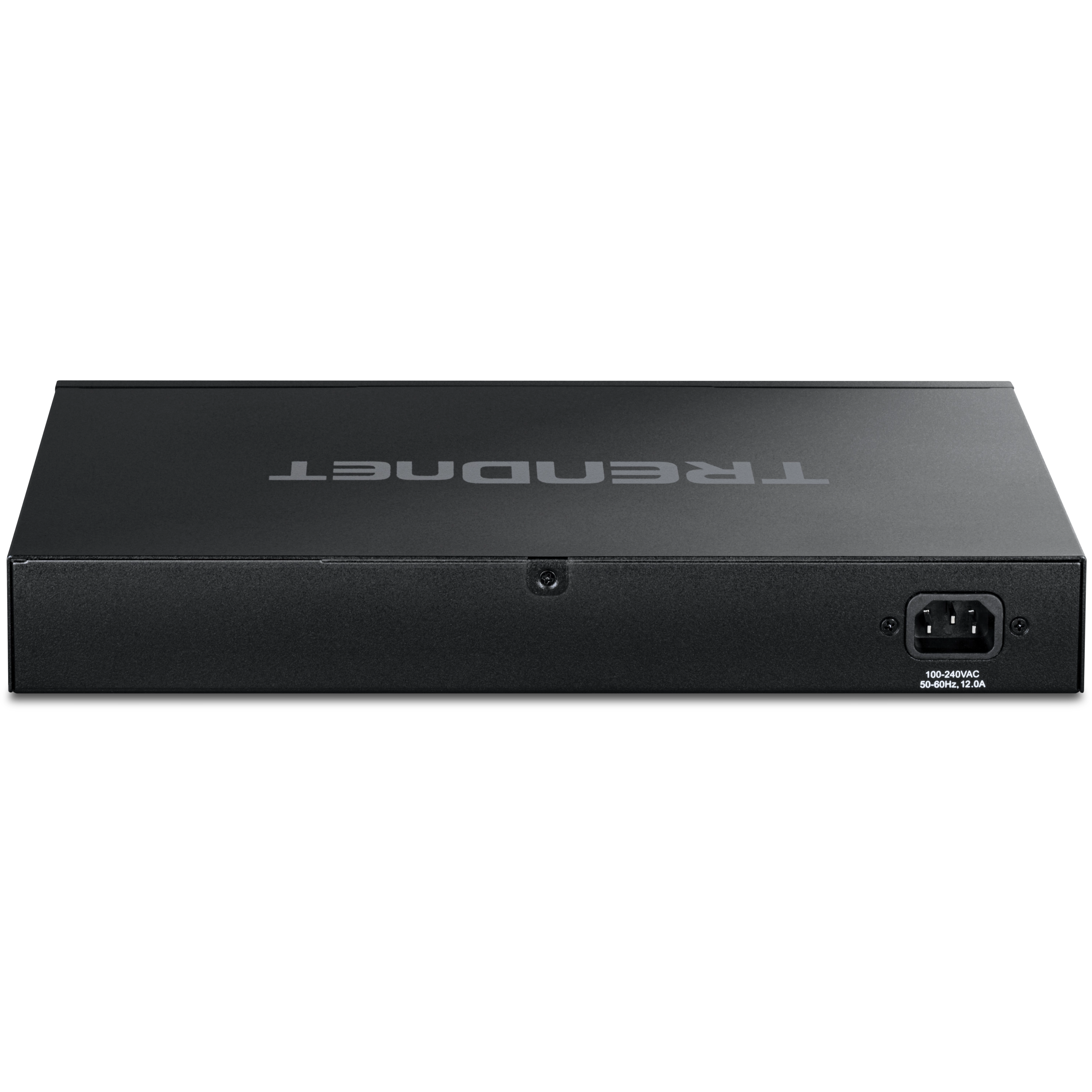
| Power | • Input: 100 – 240V AC, 50/60Hz, internal power supply • Max. consumption: 57.4W (No PD connected) |
| PoE | • PoE budget: 720W • 802.3bt: Up to 90W per port • PoE++ Pins 3, 4, 5, 6 for power+ and pins 1, 2, 7, 8 for power- • PoE/PoE+ pins 3, 6 for power + and pins 1, 2 for power- (mode A) • PD auto classification • Over current/short circuit protection • PD alive check • Fast PoE • Perpetual PoE |
| Fan/Acoustics | • Quantity: 3 • Smart fans • Max. noise level 51.1 dBA |
| MTBF | 161,000 hours @ 25° C |
| Operating Temperature | 0° – 50° C (32° – 122° F) |
| Operating Humidity | Max. 90% non-condensing |
| Dimensions | 330 x 228 x 44mm (12.99 x 8.98 x 1.73 in.) |
| Weight | 2.875kg (6.33 lbs.) |
| Certifications | • CE • FCC • UL |
| Warranty | Lifetime Warranty |
| Package Contents | • TPE-7124SBF • Power cord (1.5m / 5 ft.) • Console cable (1m / 3.28 ft.) • Rackmount brackets |
Name
Description
Size
Downloads
File
TPE-7124SBF - 12-Port 10G PoE++ Web Smart Switch - Datasheet.pdf
0.2mb

TRENDnet’s 12-Port 10G PoE++ Web Smart Switch (720W) model TPE-7124SBF offers advanced traffic management controls to meet the evolving demands of SME networks. This 10G managed PoE++ switch features an intuitive web-based interface. Management features include LACP to increase bandwidth between switches, VLANs to segment and isolate virtual LAN groups, QoS to prioritise traffic, port bandwidth controls and SNMP monitoring. These features make this a powerful solution for any SMB network. Voice performance can be improved by isolating and prioritising VoIP traffic from normal data traffic using the easy-to-use voice VLAN feature.